Catholicism is not a religion; it’s a way of life
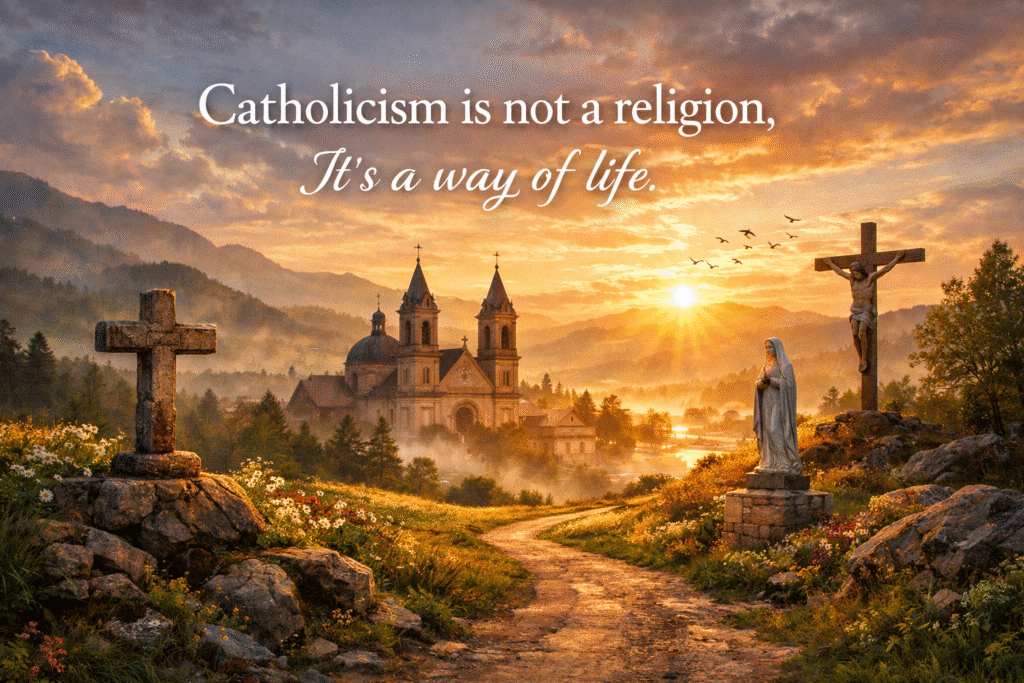
Religion, as the modern world understands it, is something one practices. Catholicism is something one becomes.
Religion can be added to life like a garment, worn when convenient and removed when uncomfortable. Catholicism does not permit such detachment, because it does not merely address what man believes, but what man is. It claims the whole person, or it claims nothing at all.
This is why Catholicism cannot be reduced to rituals, rules, or moral sentiments. It is a way of seeing reality, a way of ordering desire, a way of living under a truth that does not change simply because the age finds it inconvenient.
Christ Did Not Give Ideas, He Gave Direction
Jesus Christ did not come into the world to offer a philosophy to be admired. He came to offer a way to be walked. He did not say, “Consider my teachings,” but “Follow me.” He did not leave behind a theory of life, but a life that becomes the measure of all theory.
To follow Christ is to accept that one’s thoughts, actions, priorities, and loves must be measured against something greater than personal preference. His teachings are not inspirational slogans. They are a compass. They orient the soul toward the will of God in a world that has forgotten where true north lies.
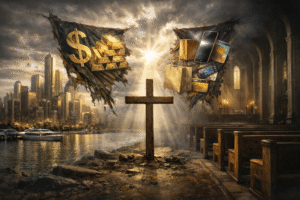
Modern man prefers values that can be edited and principles that can be negotiated. Christ offers neither. He offers truth that must be lived, even when it wounds pride, restrains appetite, or demands sacrifice.
The Will of God Is Not an Abstraction
The will of God is not a vague sentiment or a distant decree. It is revealed in the life of Christ and extended into the world through His Church. To live Catholicism as a way of life is to align one’s will, slowly and sometimes painfully, with a will wiser than one’s own.
This alignment is not passive. It is active obedience. It is choosing fidelity over impulse, truth over convenience, eternity over immediacy. It is the gradual surrender of self rule in exchange for freedom that the world cannot give because it does not understand it.
The tragedy of modern Christianity is not that it asks too much of man, but that it asks too little. It seeks to comfort without converting, to reassure without transforming, to save without commanding. Christ never offered such a bargain.
The Mass Is the Center Because the Cross Is the Center
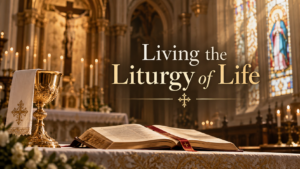
If Catholicism were merely a religion, the Mass would be symbolic. Because it is a way of life, the Mass is central.
At the altar, time bends. Heaven touches earth. The sacrifice of Calvary is not remembered as history but made present as reality. The Mass is not a gathering of the faithful expressing devotion upward; it is God giving Himself downward, once again, for the life of the world.
Here lies what the modern mind calls “esoteric” but the Church simply calls mystery. Not secret knowledge reserved for the elite, but divine reality revealed through signs that require humility to receive.
Bread becomes Body. Wine becomes Blood. The invisible God acts through visible means, because man is not a spirit trapped in a body, but a unity of both. Catholicism understands this. That is why it teaches through gesture, silence, posture, and sacrifice as much as through words.
The Sacraments Shape the Soul From the Inside
The sacraments are not religious moments scattered through life. They are the architecture of a Catholic life.
Baptism reorders identity.
Confession restores truth to the soul.
The Eucharist feeds a hunger the world cannot name.
Marriage and Holy Orders consecrate love and authority.
Anointing confronts suffering with hope rather than denial.
These are not symbols chosen for emotional resonance. They are actions of Christ continuing His work through His Church. They form a person gradually, invisibly, and inexorably, like water shaping stone.
To live Catholicism as a way of life is to allow these sacraments to do what they were given to do, not occasionally, but habitually.
A Life That Must Be Lived Entirely
Catholicism cannot be confined to Sunday because Christ cannot be confined to part of the heart. The faith must govern how one speaks, how one suffers, how one works, how one loves, and how one dies.
This is why Catholicism will always trouble the world. It refuses to be compartmentalized. It insists that truth applies everywhere or nowhere. It claims that the same God who reigns at the altar must reign in the conscience, the home, and the public square.
And yet, this total claim is not oppression. It is mercy. For man was never meant to rule himself alone. He was meant to be guided by a truth greater than his passions and sustained by a love stronger than his failures.
The Cost and the Promise
To live Catholicism as a way of life costs something. It costs autonomy. It costs illusion. It costs the comforting lie that one may belong to Christ without being changed by Him.
But what it gives in return is something the world cannot counterfeit: coherence of soul, meaning in suffering, peace rooted in truth, and a life oriented toward eternity.
Catholicism is not a religion one practices when convenient. It is a way of life one submits to because it is true.
And truth, when lived, does not diminish man.
It makes him whole.